
Sprinkler System Watering Schedule for Brazos Valley Summer: Zone by Zone Setup
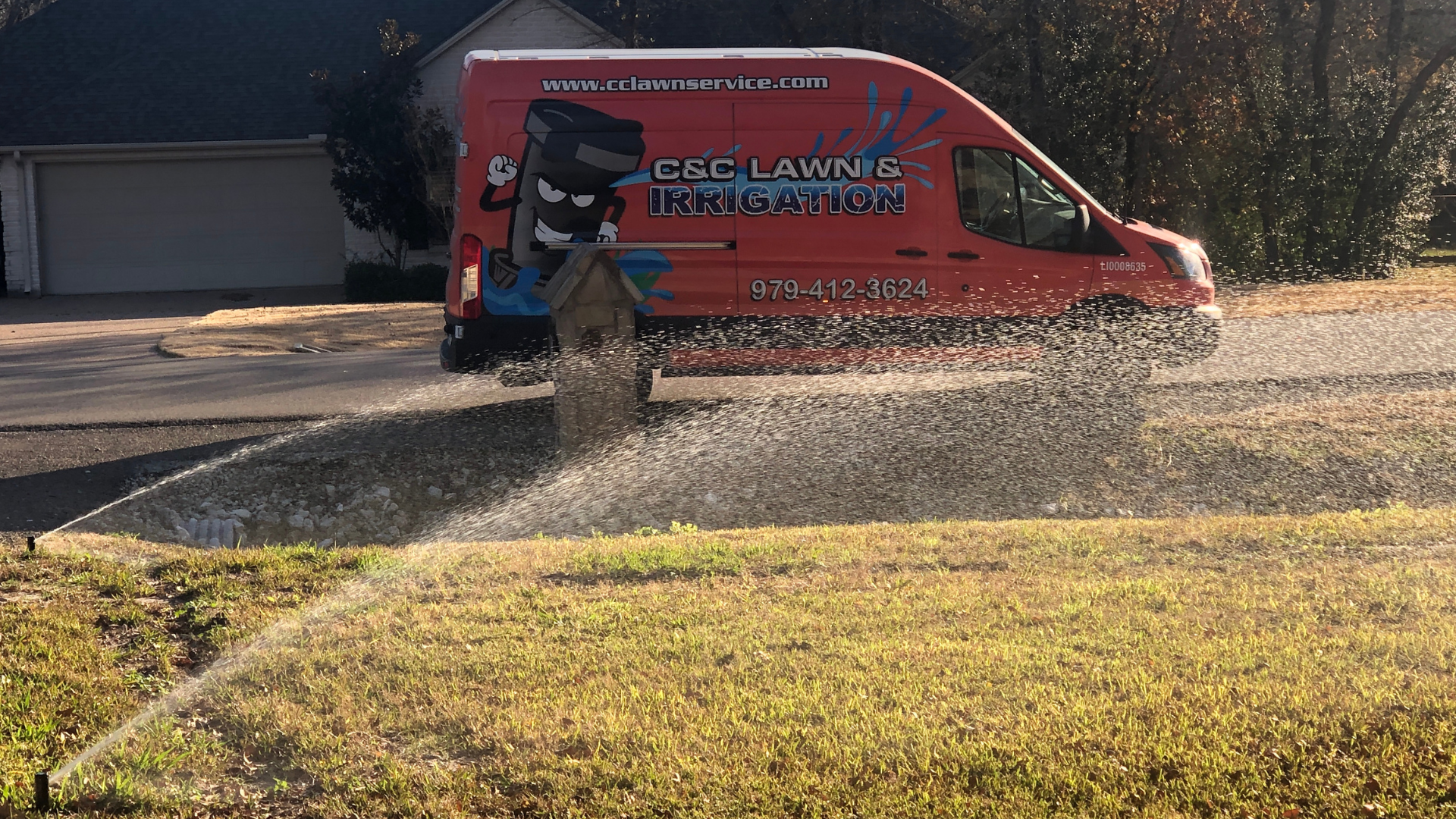
Short Answer: For most Bryan and College Station properties, the right summer sprinkler setup is two cycles per week, applied in the early morning (4 to 8 a.m.), with each zone calibrated separately based on grass species, sun exposure, and soil. Turf zones get about an inch of water per week total. Bed zones get less and drip irrigation runs longer at lower flow. Trees need supplemental deep watering that no lawn sprinkler delivers. Daily short cycles are the most common Brazos Valley mistake and the reason most yards struggle in July and August. Here is exactly how to set up your controller, zone by zone, for the rest of summer.
If your sprinkler system has been running on the same schedule since installation, June is the right week to fix it. Brazos Valley summers are unforgiving on sprinkler programs that were dialed in for spring conditions or never properly set up at all. A 15-minute review of each zone, followed by some specific changes to the controller, separates the lawns that hold color through July from the ones that brown out in patches by mid month.
We want to walk you through exactly how to set up each zone, what numbers to use for each grass type and bed type, and what most local homeowners are getting wrong. This is the schedule we set up for our irrigation customers, and the same approach works whether you do it yourself or have us run the setup.
The General Rule for Brazos Valley Summer
Before we get into zone-by-zone settings, the high-level rule. Most turf in our area needs about one inch of water per week during summer, including rainfall. That total should be delivered in one or two deep cycles rather than daily light ones. Watering should happen in the early morning, ideally between 4 a.m. and 8 a.m., when wind is low, evaporation is minimal, and the lawn has time to dry before evening (which reduces disease pressure).
Within that framework, every zone is different. A St. Augustine zone in heavy shade needs different settings than a Bermuda zone in full sun. A bed with drip irrigation works differently than a pop-up zone covering a slope. The mistake most homeowners make is running every zone with the same settings, because that is how the installer left the controller five years ago.
Zone Setup: Bermuda in Full Sun
Bermuda grass is the most drought-tolerant common turf in our area and the most heat-resistant once established. Full sun Bermuda zones in Bryan and College Station can typically handle the upper end of summer watering without breaking down.
Total weekly volume: about 1 inch per week, including rainfall.
Cycles per week: 2 cycles, spaced 3 to 4 days apart (Monday and Thursday, or Tuesday and Friday).
Per-zone runtime: depends on head type. Rotary heads delivering about a third of an inch per hour need about 75 to 90 minutes per cycle. Spray heads delivering about three quarters of an inch per hour need about 35 to 40 minutes per cycle.
For clay-heavy soils that cause runoff with long cycles, use a cycle-and-soak pattern: split each runtime into two shorter intervals with an hour of soak in between.
Zone Setup: St. Augustine in Mixed Sun
St. Augustine is more water-demanding than Bermuda and less heat-tolerant, but the grass species is also more shallow-rooted, which means deeper watering returns even more benefit. Most St. Augustine zones around homes in our area run partial shade in the morning or afternoon.
Total weekly volume: about 1 to 1.25 inches per week, including rainfall.
Cycles per week: 2 cycles, spaced 3 to 4 days apart.
Per-zone runtime: rotary zones about 90 to 105 minutes per cycle. Spray zones about 40 to 50 minutes per cycle.
If the zone is in deep shade most of the day, drop the runtime by about 30 percent. Shaded lawn evaporates less and watering at the full sunny rate keeps the surface too wet, which invites disease.
Zone Setup: Zoysia
Zoysia falls between Bermuda and St. Augustine on water demand. Mature Zoysia is drought-tolerant but takes longer to recover from stress than Bermuda does.
Total weekly volume: about 0.75 to 1 inch per week.
Cycles per week: 2 cycles.
Per-zone runtime: rotary zones about 70 to 80 minutes per cycle. Spray zones about 30 to 40 minutes per cycle.
Zoysia tolerates slightly more dryness between cycles than St. Augustine, and trying to overcompensate often causes more problems than it solves.
Zone Setup: Landscape Beds (Pop-Up Sprays)
Bed zones with pop-up spray heads are usually configured the same as the lawn zones they sit near. That is almost always wrong. Established plantings need less water than turf because their root systems go deeper and they have more leaf surface to shade the soil.
Total weekly volume: about 0.5 to 0.75 inches per week.
Cycles per week: 2 cycles is fine. Some beds do well on just one deep cycle per week.
Per-zone runtime: about half what the adjacent lawn zone gets.
Beds that contain established native or drought-tolerant plants can run on even less water without stress. Beds with newer plantings or annual flower color may need more. Adjust to the specific plant material.
Zone Setup: Drip Irrigation
Drip zones are completely different from spray zones. They deliver water at a low flow rate directly to the root zone of specific plants. Runtime is measured in tens of minutes or hours, not the few minutes you would use for spray heads.
Total weekly volume: depends entirely on emitter count and flow rates.
Cycles per week: 2 to 3 cycles is typical for established plantings.
Per-zone runtime: 30 to 90 minutes per cycle, depending on the system design.
If you have drip on a separate zone (which is the right setup), it almost certainly needs different settings than your spray zones. If your drip is on the same zone as spray heads (which we do not recommend), the system is compromised. We can usually rework this during a regular service visit.
Trees Are Not Lawn Zones
This is the part most homeowners miss. Mature trees on a residential property need water that no lawn sprinkler delivers. A 10 inch diameter live oak needs roughly 100 gallons of water in a deep slow soaking every 7 to 14 days during summer. That is way more than your sprinkler delivers and way deeper than your sprinkler reaches.
The simple fix is a soaker hose laid in a spiral around each major tree, run on a kitchen timer for 60 to 90 minutes once a week. It is separate from your irrigation system schedule and it is one of the most important pieces of summer water management on a Brazos Valley property.
The Settings Most Homeowners Get Wrong
Watering at the wrong time. Evening watering keeps the canopy wet overnight and dramatically increases disease pressure. Late morning and afternoon watering loses 30 to 40 percent to evaporation. Early morning is the only consistently right time.
Daily watering. Trains shallow roots that cannot survive July heat. Even if your lawn is showing stress, switch to deep infrequent rather than daily.
Same runtime on every zone. Each zone has different soil, different sun, different plant material. Single-runtime schedules waste water in some zones and underwater others.
Smart controllers running their factory defaults. Most defaults are conservative in ways that prevent damage but do not actually optimize for our climate and soils. Take time to set up a custom program.
What to Check This Week
Pull up your controller settings and look for the same red flags we look for on inspection visits. Are any zones running for the same number of minutes? Are you watering more than three days a week? Is anything running after 9 a.m. or before 4 a.m.? Is your drip on the same zone as your spray heads? Are you actually getting two cycles per week per zone, or did the controller get programmed for one cycle a long time ago?
Five minutes of review usually surfaces at least one or two changes worth making before the worst heat arrives.
What to Do Next
If you want help setting up your zones for the season, we are glad to come run a summer setup. We will calibrate every zone to your actual grass and soil, document the program so you know what is running and why, and walk through any changes with you before we leave. Properties we set up correctly in June consistently have fewer dry spot calls and lower water bills the rest of the season.
Call us at 979-412-3624 or visit cclawnservice.com to request your inspection or schedule a summer irrigation setup. We serve homeowners across Bryan, College Station, and the Brazos Valley, and we will tell you honestly what your system needs (and what it does not) before doing any work.